
 Maybe because I grew up in a household where we ate fruit for dessert, I didn’t have a lot of experience with cake. Classic all-American, Betty Crocker-style layer cakes —as high and round as a hatbox, thickly iced on the top and sides — to me, these desserts existed in the realm of the slightly unreal. I saw them on TV, under glass domes at diners, and most of all, in picture books. For the most part, these weren’t books about cakes. These exuberant confections — often pink, with a wiggly decorated border — were usually there as plot punctuation, existing somewhere in the background, maybe rounding out the scene of a party. But the page with the cake picture inevitably became my favorite part of the entire book.
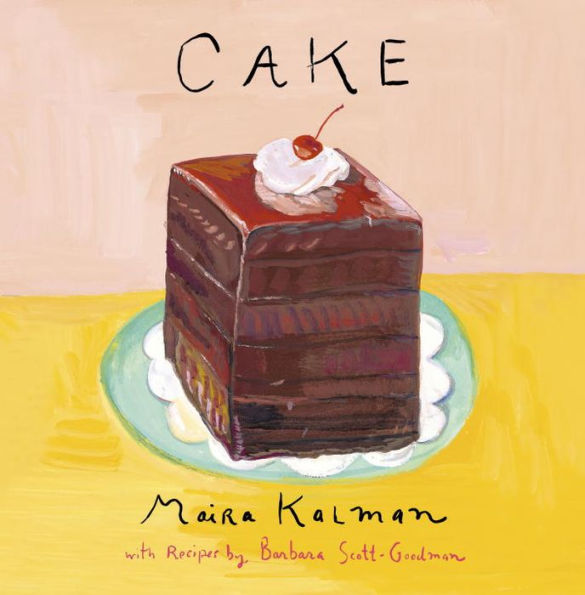
I was recently reminded of this when I heard that Maira Kalman’s newest book was called, quite simply, Cake. It’s a combination of memoir, art book and cookbook that’s very Maira. After all, she’s been lovingly illustrating cakes — many in her children’s books — for years now.
Here are some of my favorite cakes in children’s books:
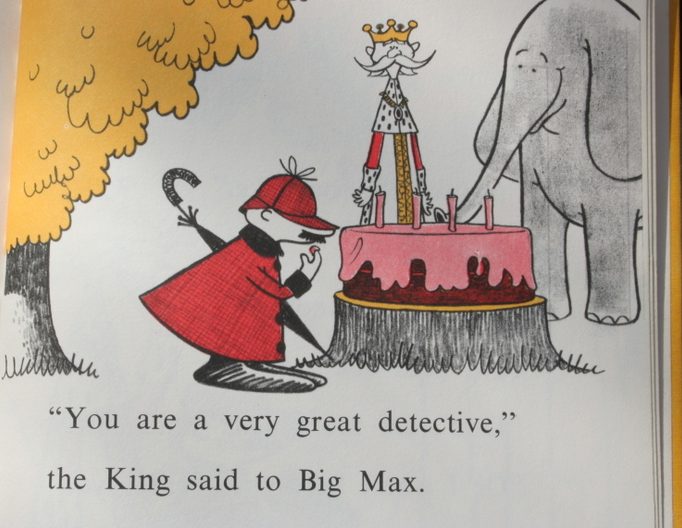
BIG MAX by Kin Platt, illustrated by Robert Lopshire (1965)
In the I Can Read book by Kin Platt, the King of Pooka Pooka’s pet elephant goes missing and it’s up to detective Big Max to find him. I was enthralled as much by Max’s sleuthing skills as by the birthday cake served at the end. This cake is about as big as a Goodyear tire and to my adult eyes now, looks about as tasty as one. But I know I dreamed about this confection and treasured the near-final scene showing Big Max licking frosting off his finger.
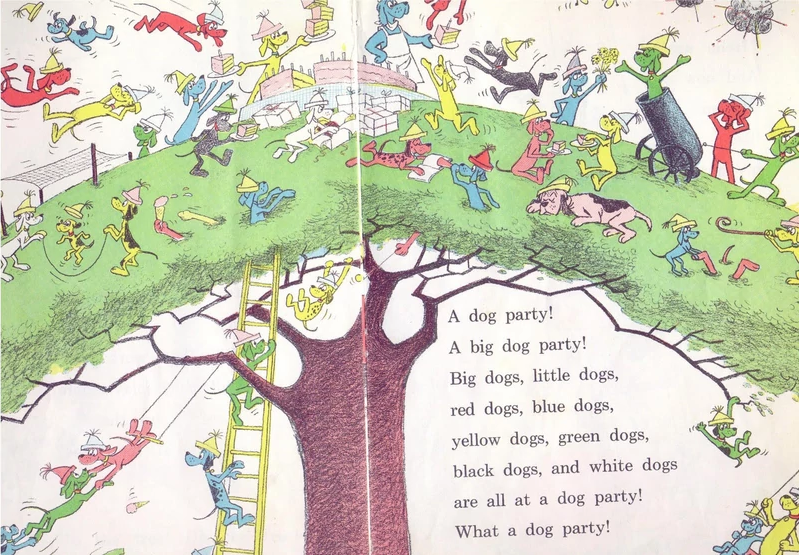
Go, Dog, Go! by P.D. Eastman (1961)
Then there’s the dog party scene in P.D. Eastman’s classic. I loved reading this book to my kids and we would always linger over the insane canine free-for-all at the end. At this tree-top party there are presents, a trampoline, a canon (!), a trapeeze and, of course, the main attraction: the layer cake (again, frosted pink). This one is the size of a wading pool and you could only describe the pieces being served as wedges (not slices). The dogs are literally leaping towards this cake from all directions.
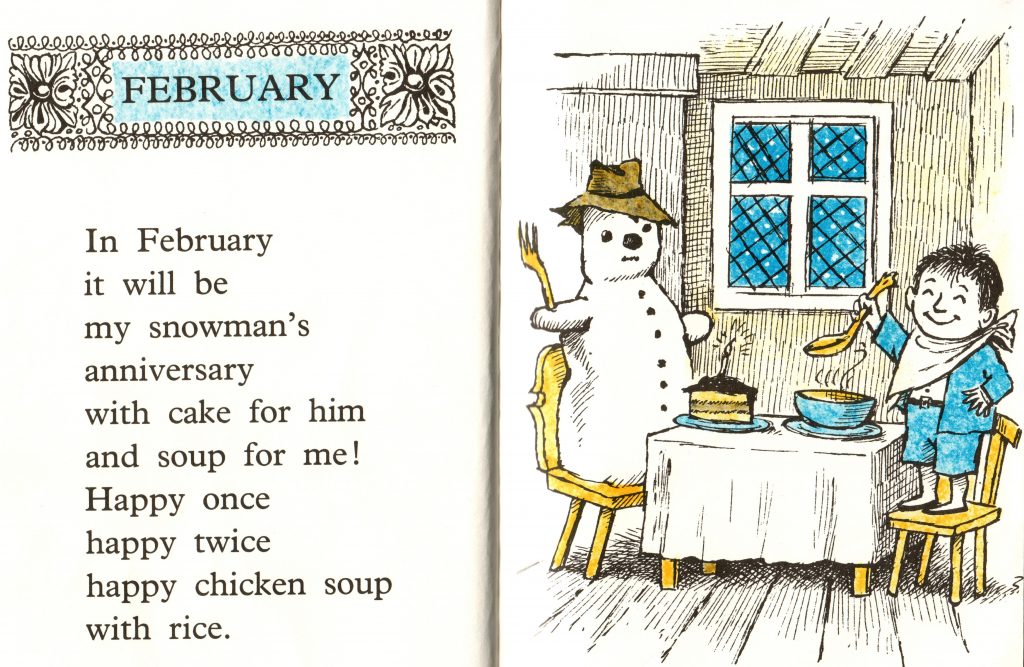
Chicken Soup with Rice by Maurice Sendak (1962)
As a kid I loved the idea that you could bring a snowman inside your house, no problem. And it all made perfect sense, as long as you didn’t let the hot soup melt the snowman. I thought about what I’d do if I were in the house: I would first eat the soup, and then (duh) the cake.
Lyle and the Birthday Party by Bernard Waber (1966)
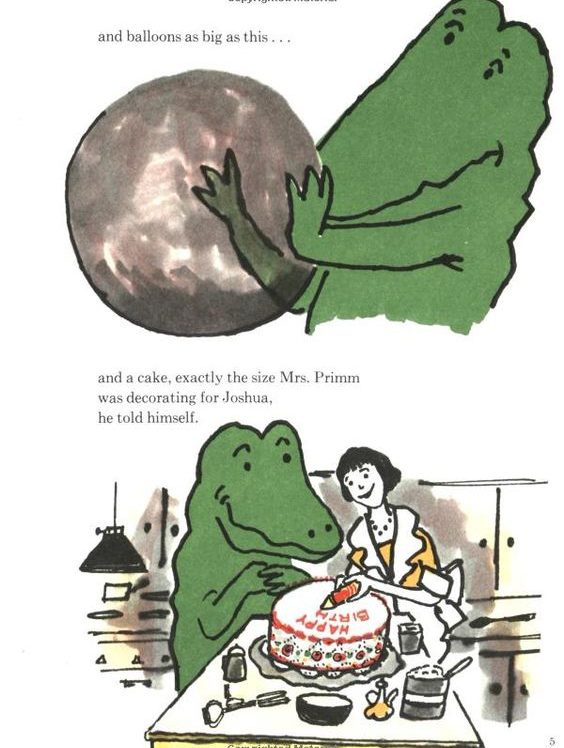
In this installation of the Lyle series, our favorite adopted crocodile starts to feel “mean, green jealous,” when he realizes he’s missing out on the inalienable right to a birthday party. In his fantasies, Mrs. Primm is lovingly decorating a homemade birthday cake for him. You have to love the way Lyle is clutching his hands and looking upon the thing in joyful disbelief. I feel like this is what it would be like to have Ina Garten making your cake.
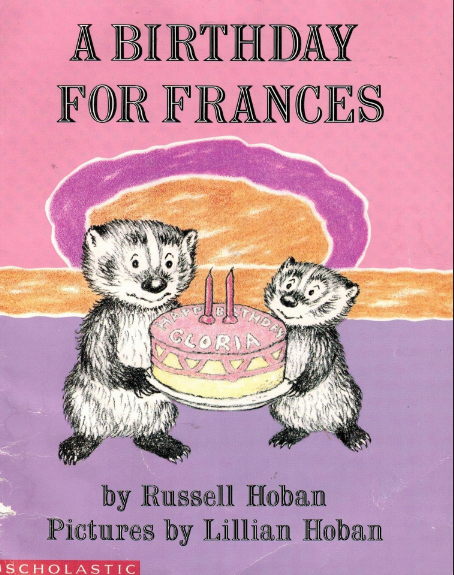
A Birthday for Frances by Russell Hoban (1968)
Frances is seething with jealousy over her little sister Gloria’s birthday. Lillian Hoban gives us another giant pink-frosted cake (why were so many of these cakes pink?!) so big it takes two badgers to hoist it. Frances refuses to sing “Happy Birthday” with everybody else and sings her own version: Happy Chompo to me/ Is how it ought to be/ Happy Chompo to Frances/ Happy Chompo to me. (Chompo is the candy bar she was planning to give Gloria as a gift).
Thunder Cake by Patricia Polacco (1997)
Jumping ahead a few decades, there is this strawberry-topped chocolate cake that a grandmother and granddaughter bake during a thunderstorm in Patricia Polacco’s book. The combination of chocolate with “three overripe tomatoes” is so strange I need to imagine that it’s actually good, like green tomato pie a la Ma Ingalls. Polacco includes a recipe as well.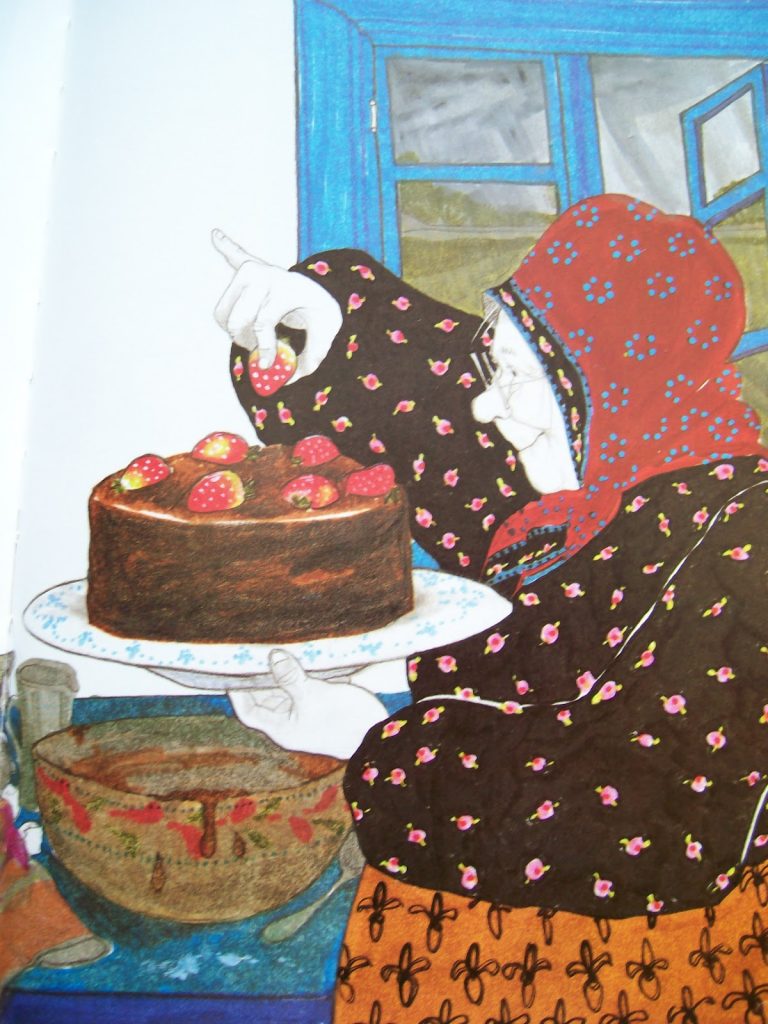
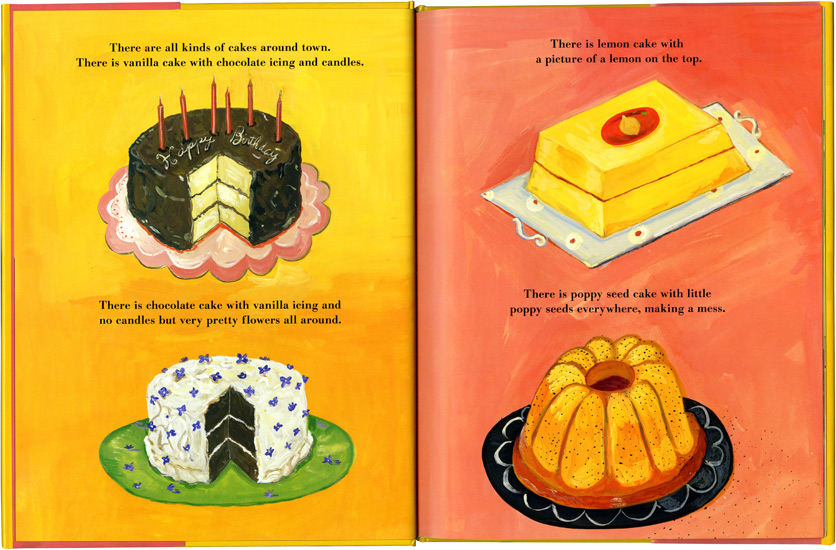
Thirteen Words by Lemony Snicket, illustrated by Maira Kalman (2010)
And now we come full circle. Illustrated by Maira Kalman, this not very plot-driven but totally delightful play on a word book creates a narrative about friendship based on thirteen key words: Bird, Despondent, Dog, Busy, Convertible, Goat, Hat, Haberdashery, Scarlet, Baby, Panache, Mezzo-Soprano, and, of course, Cake. This spread alone is worth the price of admission.
I know I’m missing some important cakes in books. What am I forgetting??? Please tell me in the comments!
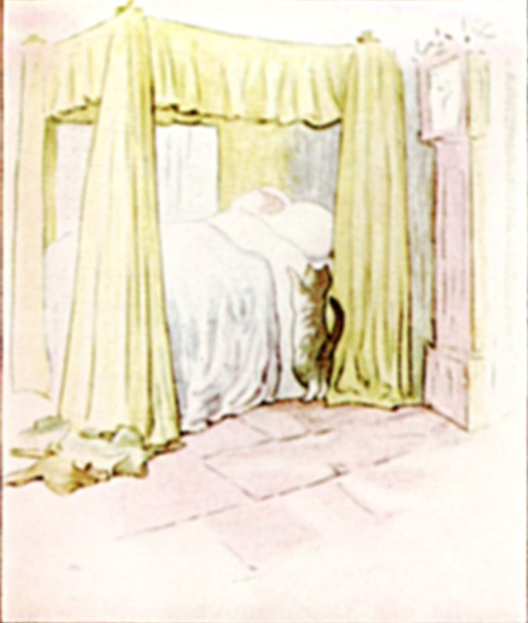
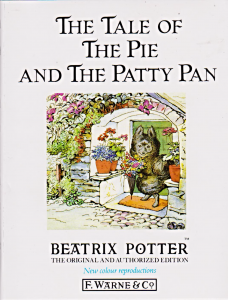 Don’t expect your kids to be as taken with The Tale of the Pie and the Patty Pan as they might be with Peter Rabbit or Squirrel Nutkin. But this Beatrix Potter story — #17 in her Peter Rabbit series — is my new personal favorite Potter.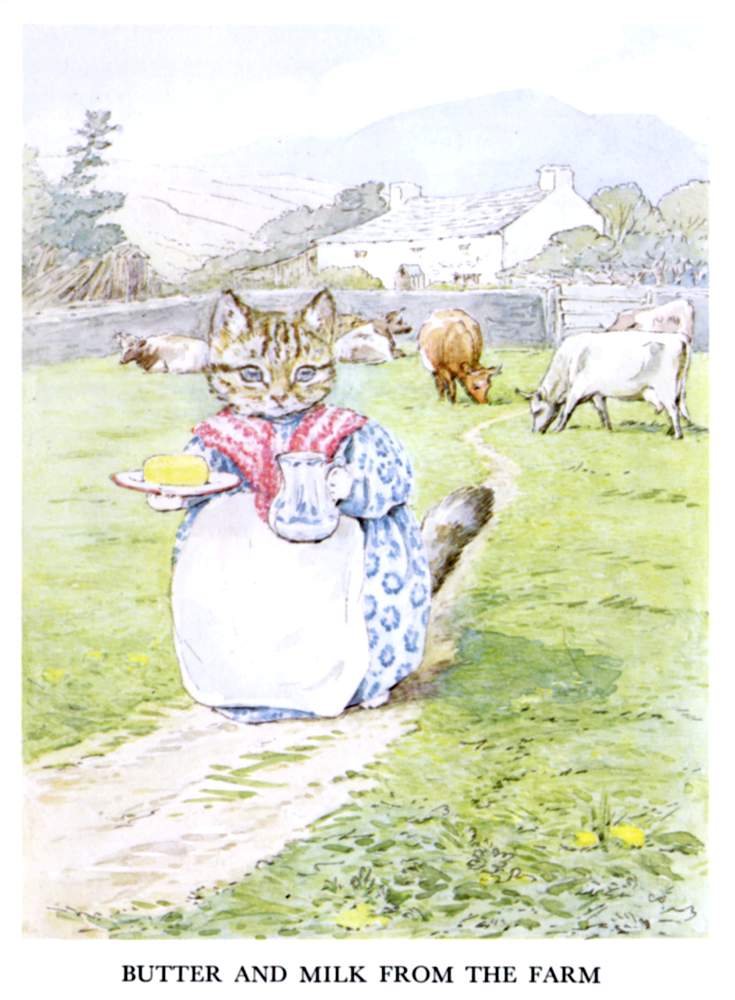
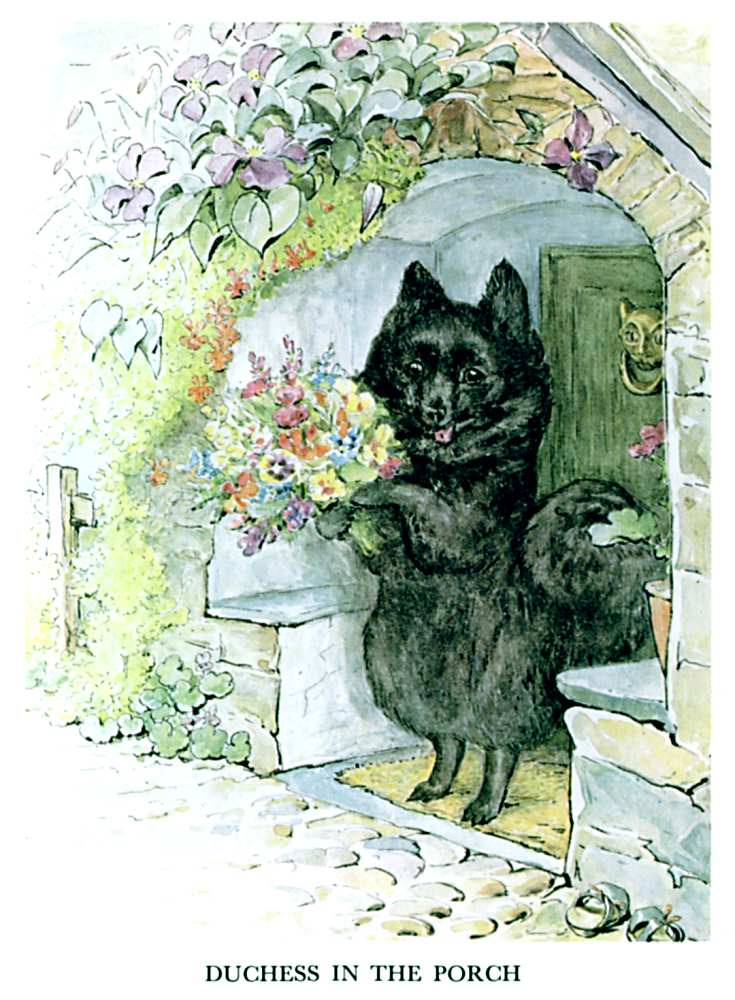 The friends exchange rehearsed pleasantries: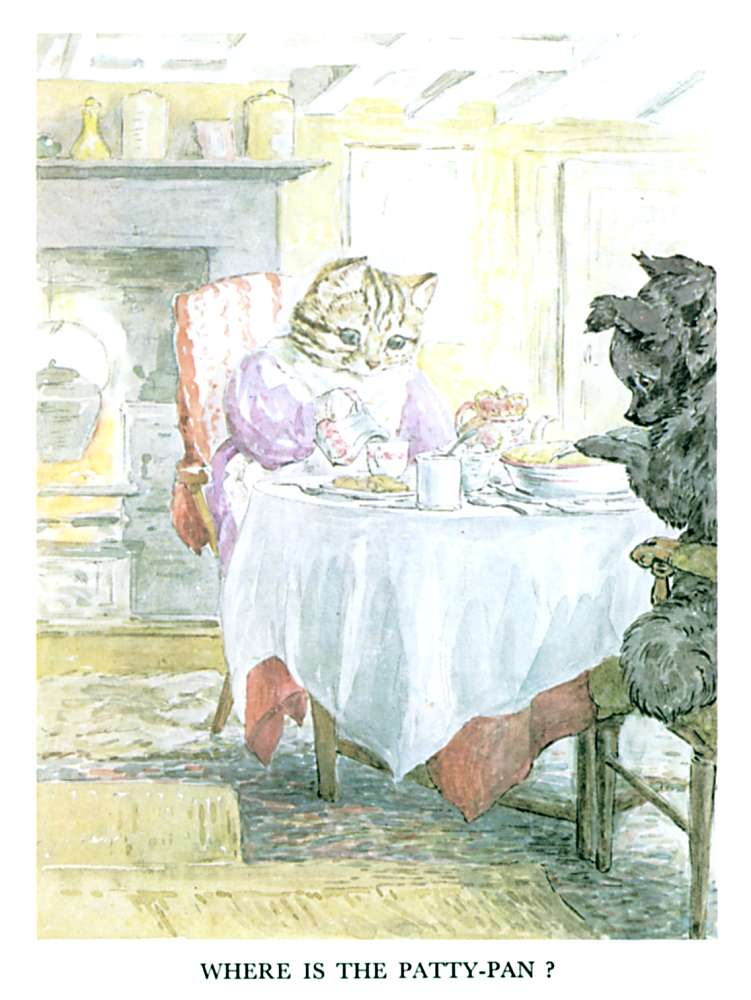
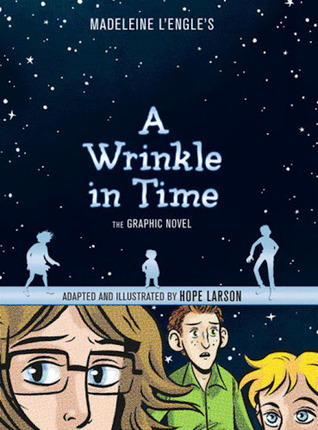
 So … here is some advice. If you’re a fan of Madeline L’Engle’s novel and want another taste of it, look for the fantastic graphic novel adaptation by Hope Larson, which came out in 2012.
 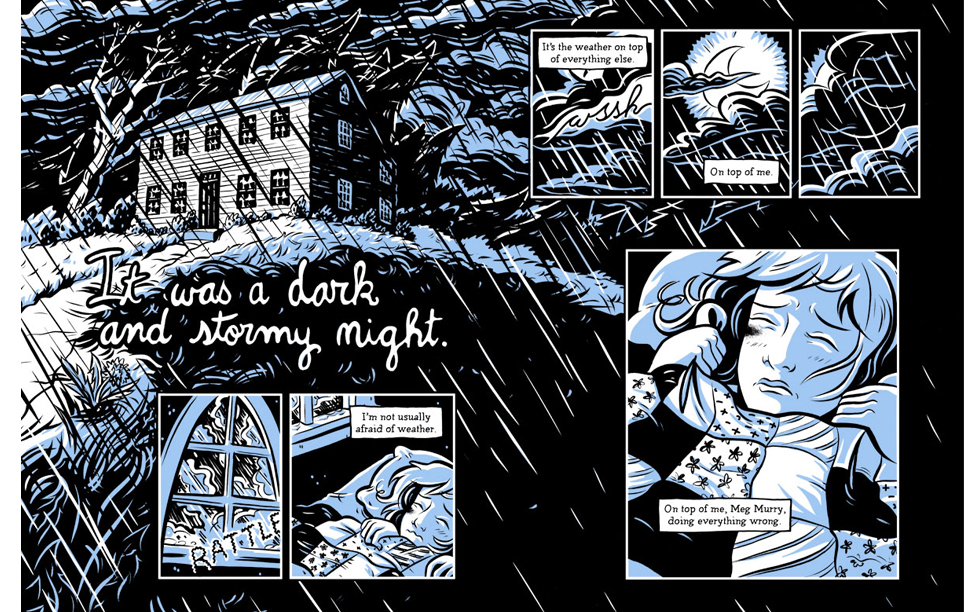 I love that she starts with the opening words of the novel: “It was a dark and stormy night.” And the way Larson plays with layers, scale, and moody tones of black, white, and blue support the story beautifully.
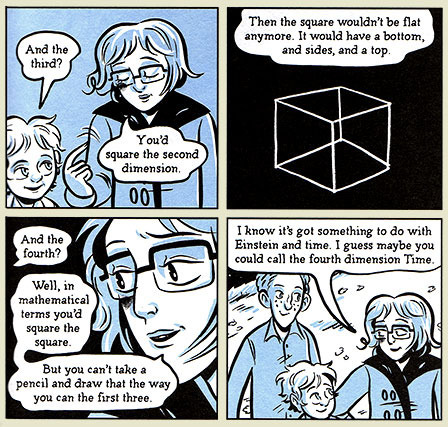 P.S. Larson has a new graphic novel coming out this May titled All Summer Long, about a thirteen-year-old girl facing a summer vacation of guitar playing, boredom, strained friendships and new friendships. Here’s the cover, which I already love: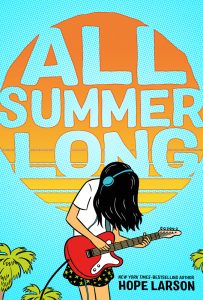
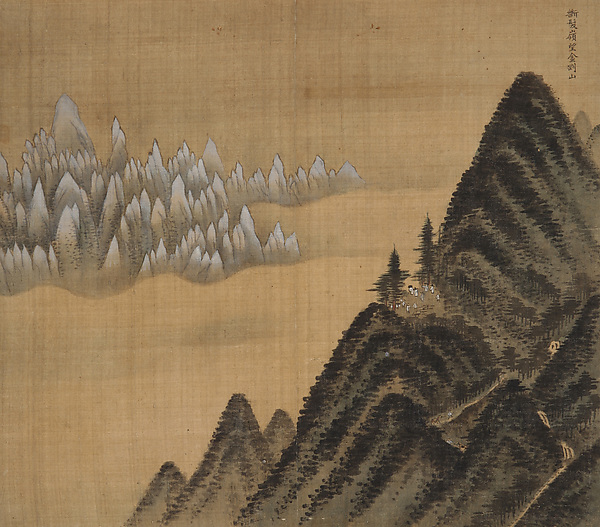
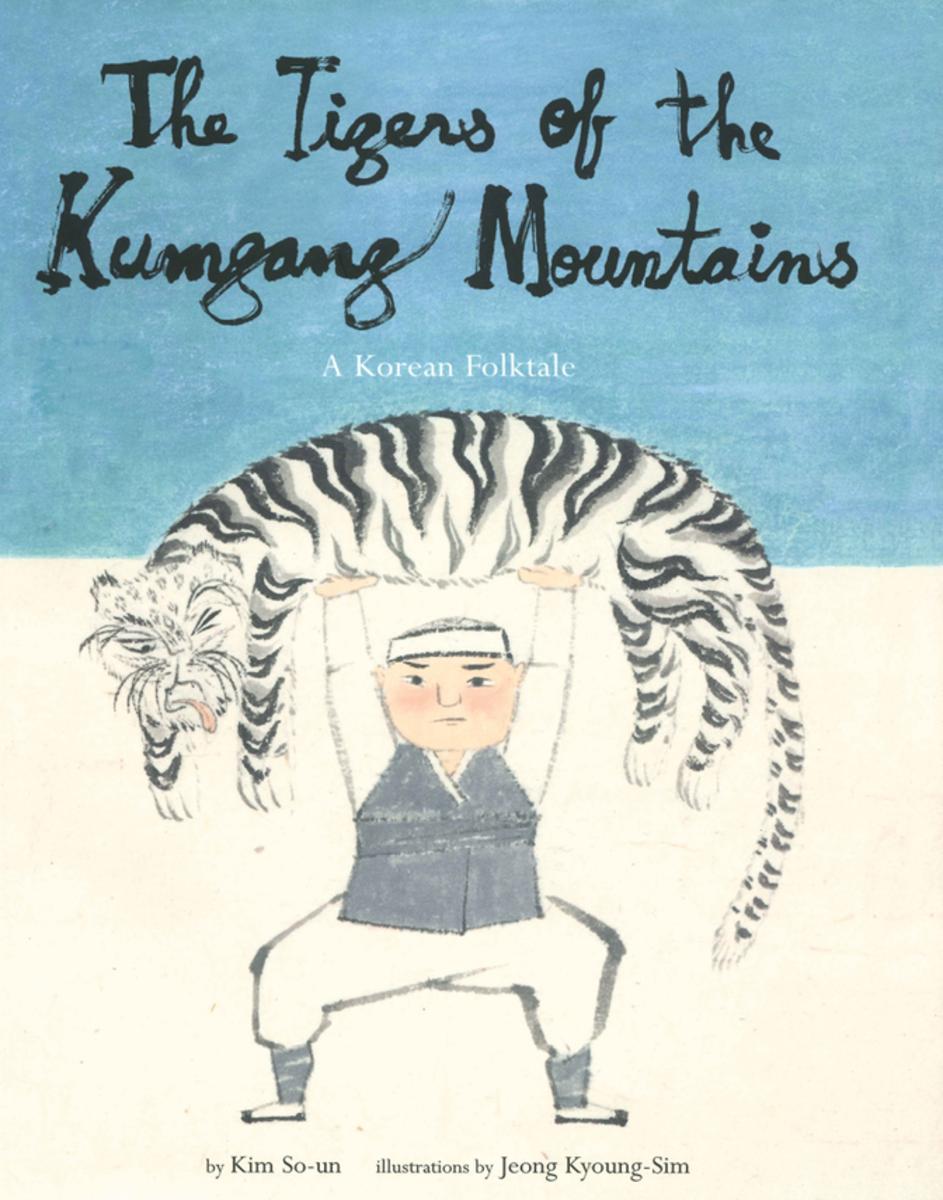
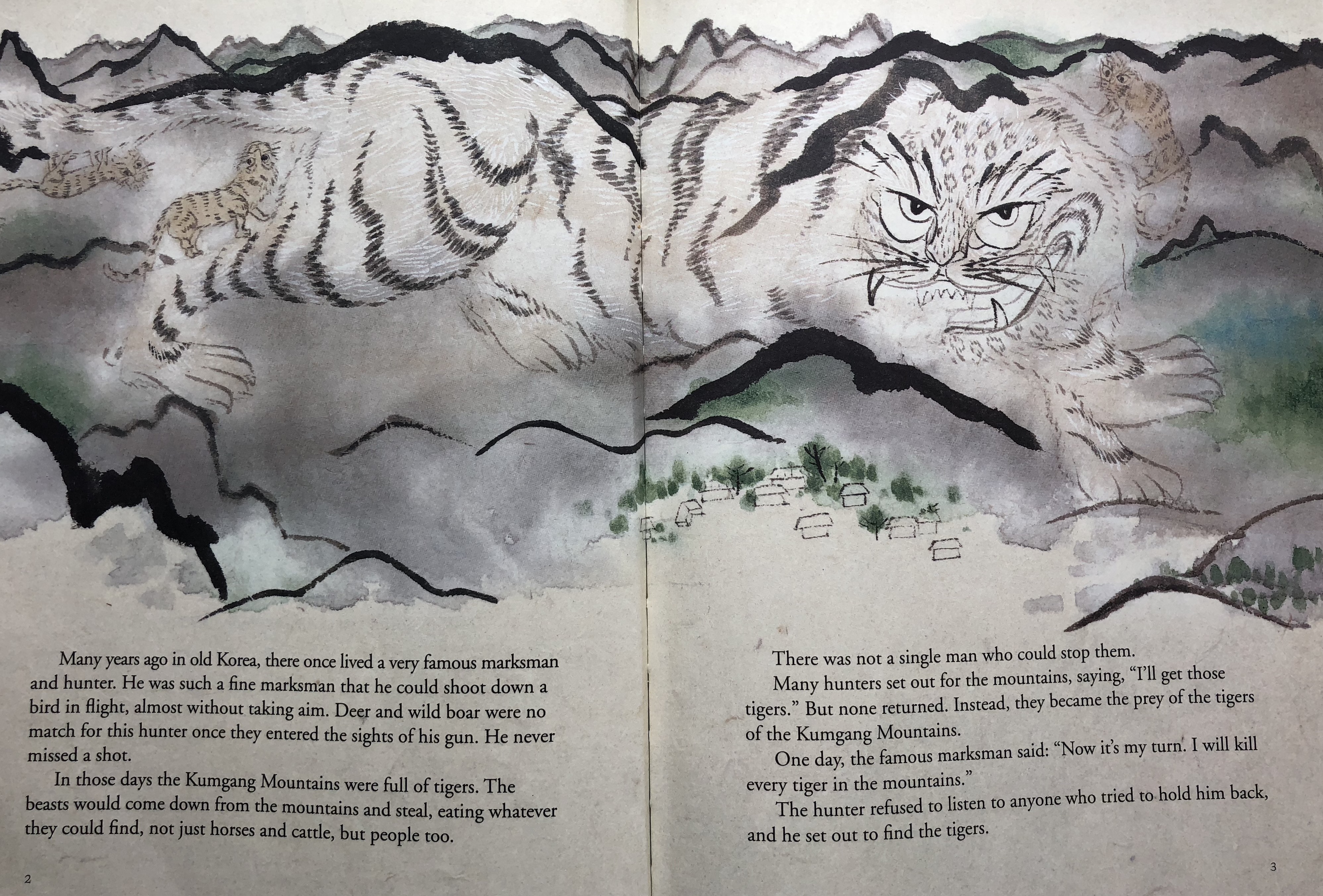 The story is pretty strange, even for a folk tale. But younger children willing to overlook the holes in logic will find it mesmerizing. And the illustrations, based on traditional Korean painting techniques, capture a lot of the magic and mystery of the Diamond Mountains.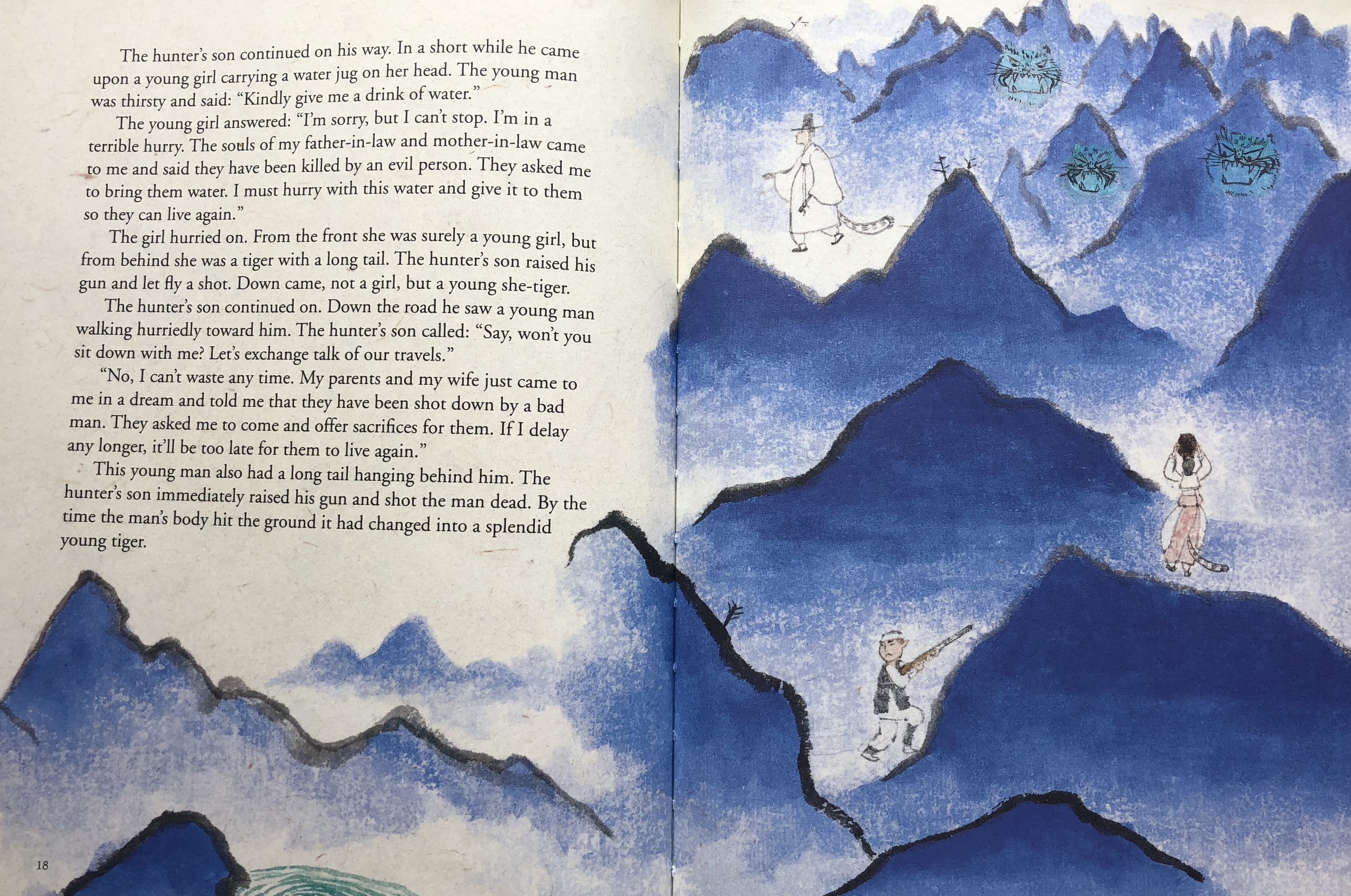
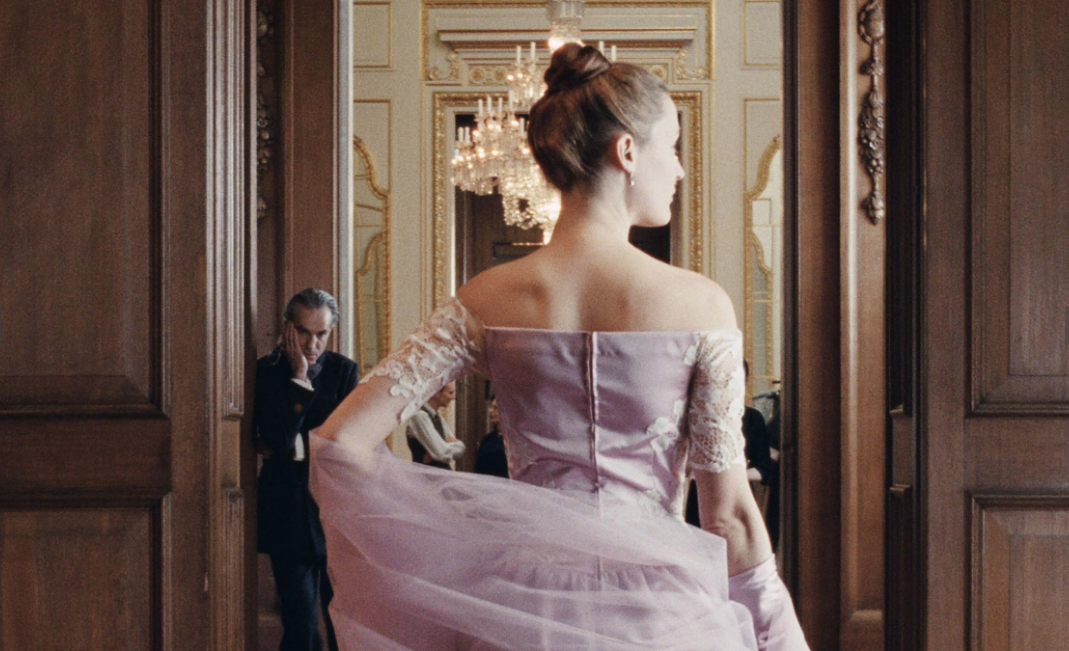 I absolutely loved Paul Thomas Anderson’s The Phantom Thread. So controlled, so funny, so sumptuous, so mysterious.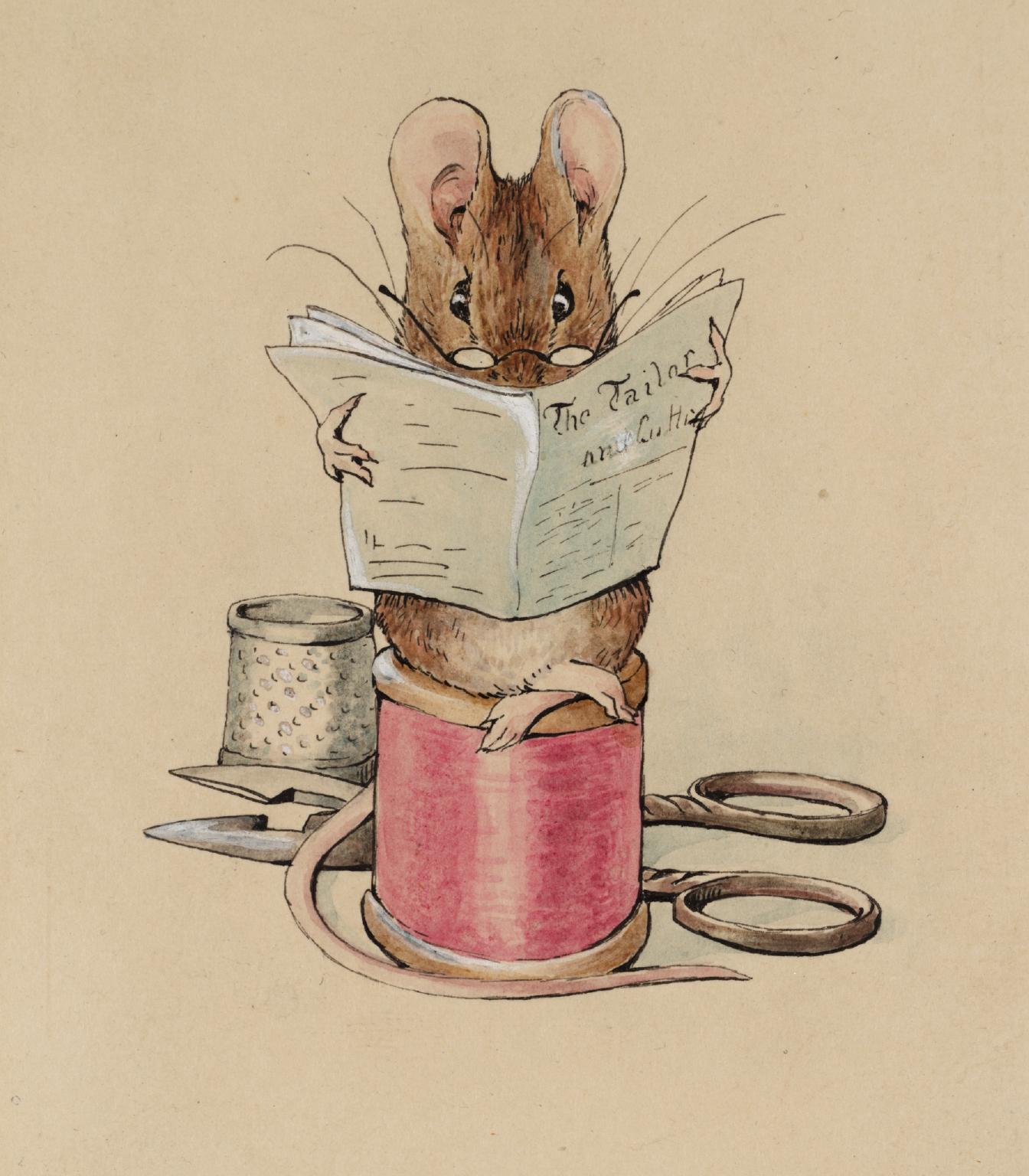
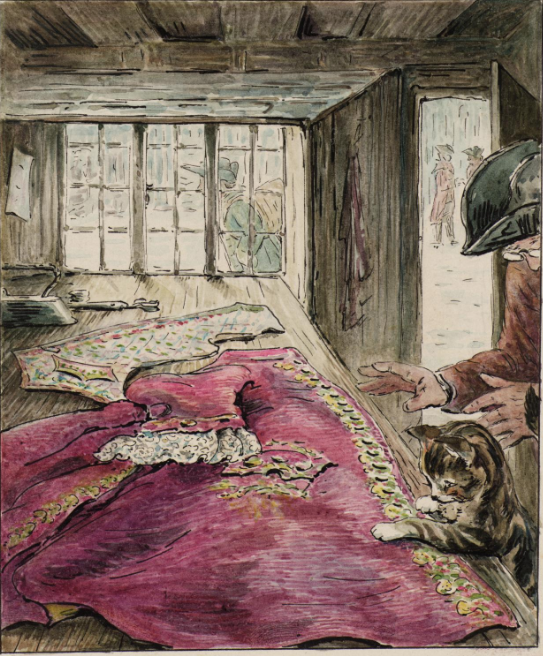
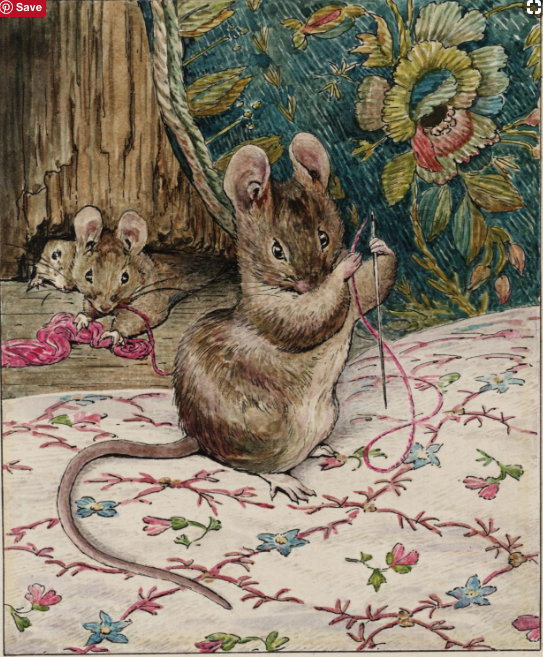
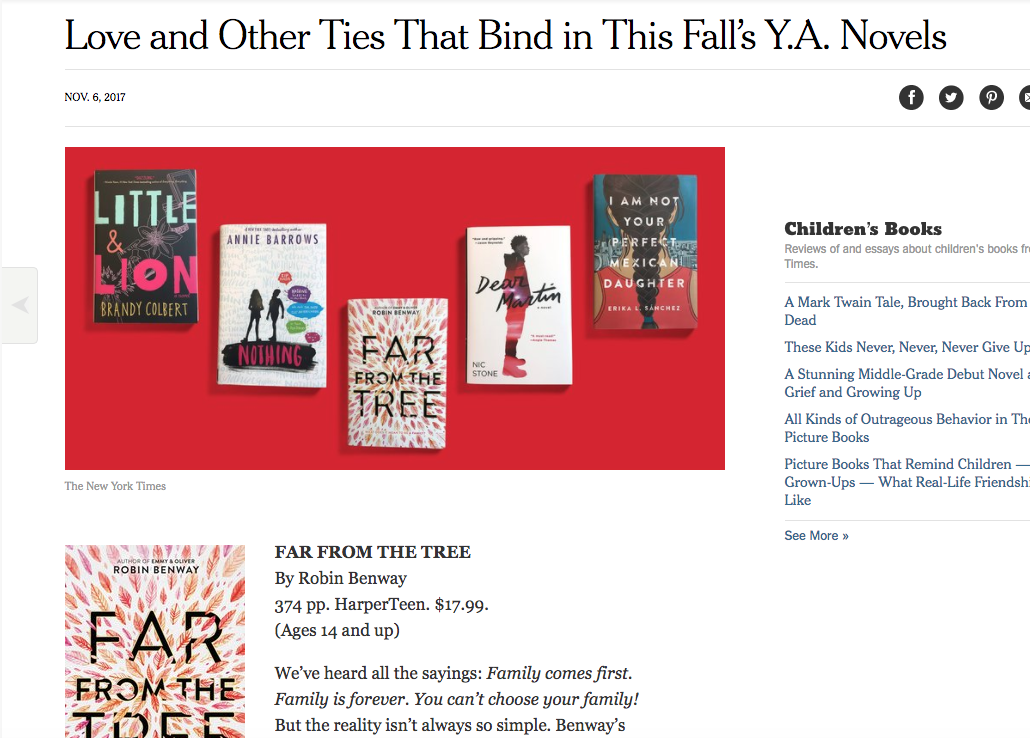
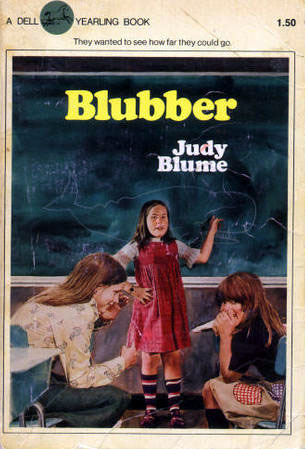 I’m not sure why I never read Blubber when I was a kid. But the other night I finally picked it up and yow. While I can’t say it’s an enjoyable 153 pages, it’s brilliant and fascinating on multiple levels, from the details of everyday suburban life in the 1970s to the jaw-dropping brutality of the fifth-graders at the center of the story. The novel is definitely worth a read, if only to remind yourself that while many aspects of childhood have changed (these kids have an unsupervised lunch period at school, for instance, giving them the perfect opportunity to torture Linda) other things remain the same: Nice fifth grade girls from nice families can seem totally normal while being secretly sadistic torturers. It is psychologically dead-on.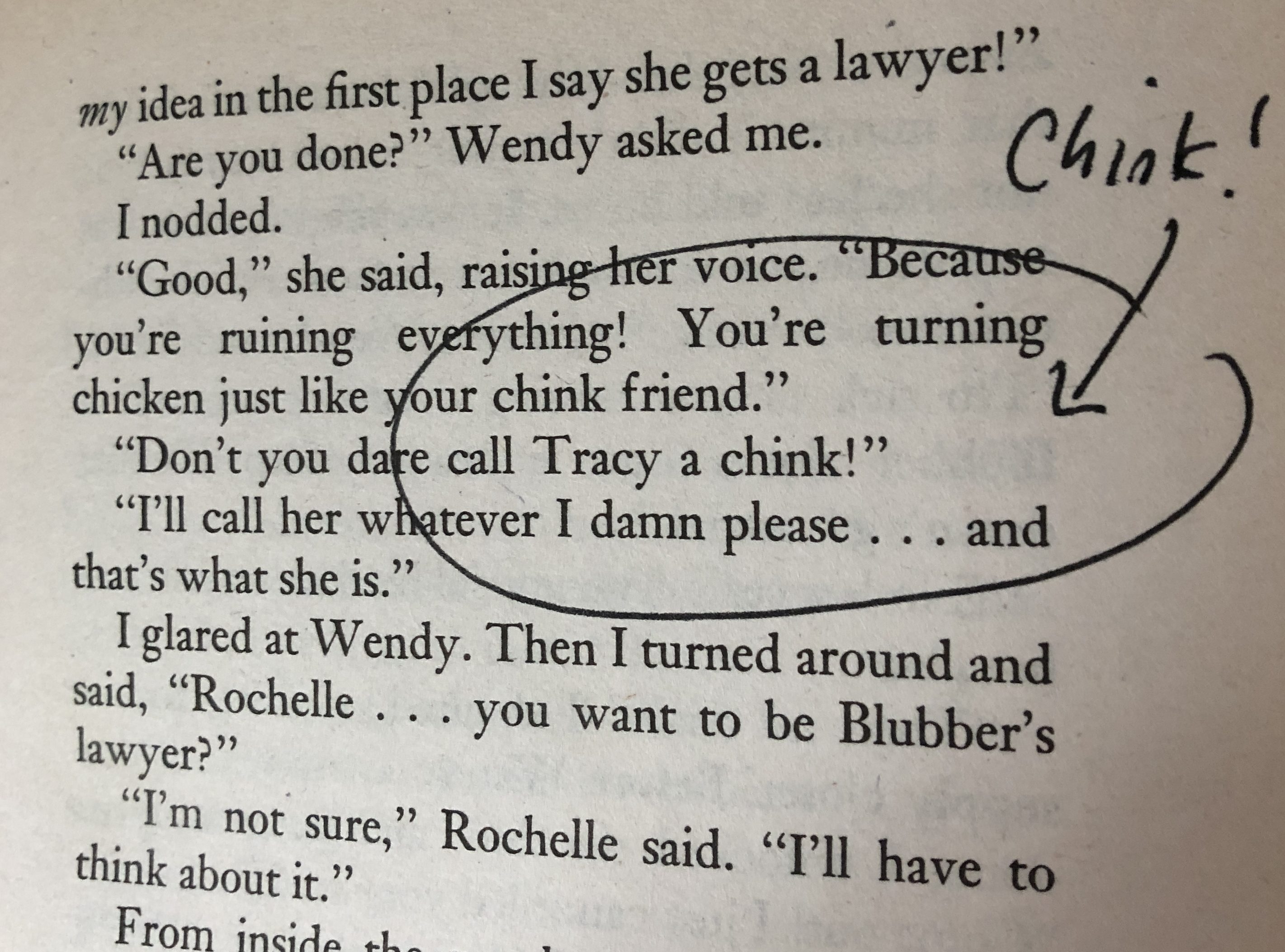
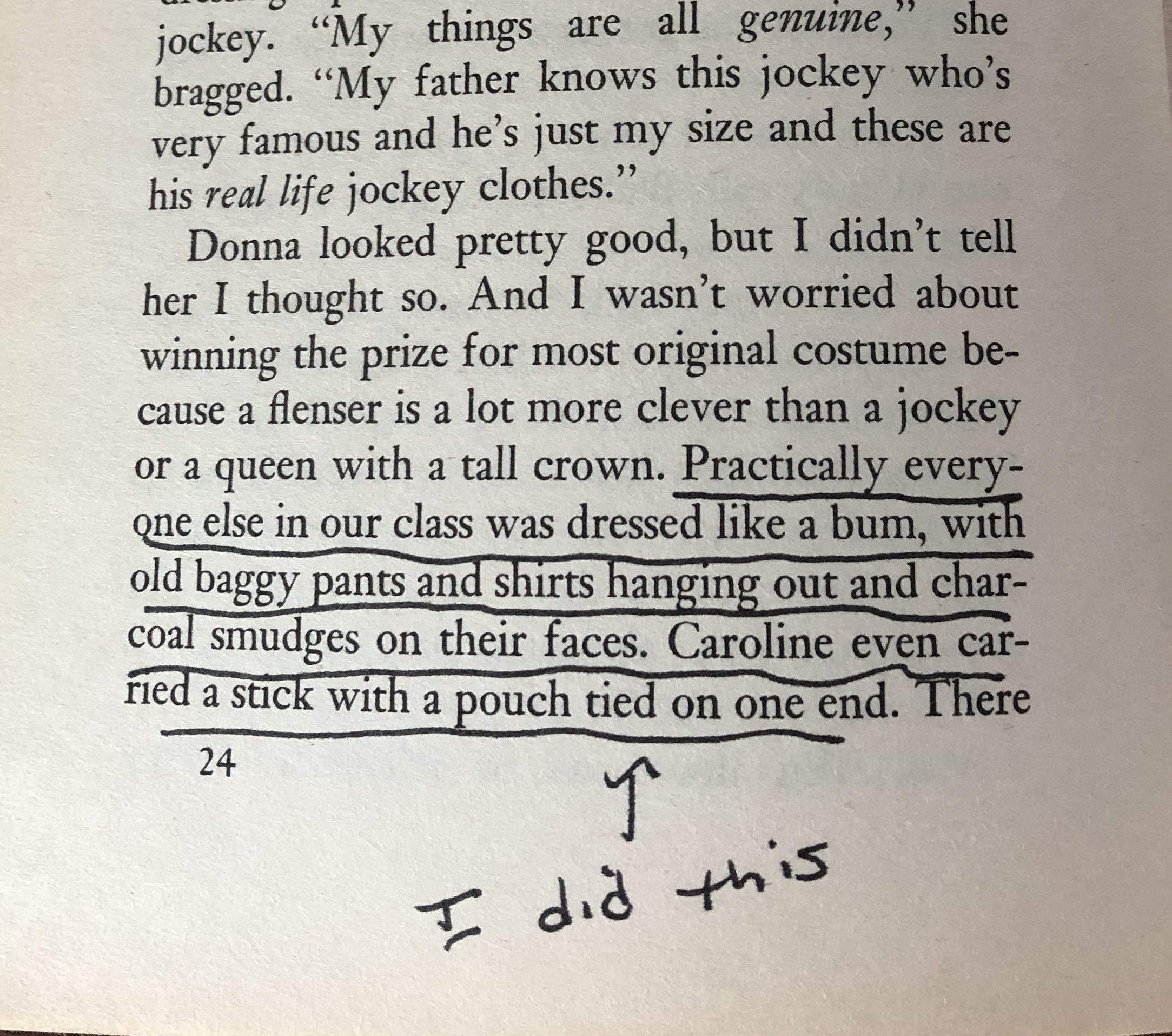 I remember dressing as a bum too. It was a very easy costume to pull off. Sometimes I’d just dress up like a bum for fun, even when it wasn’t Halloween.**
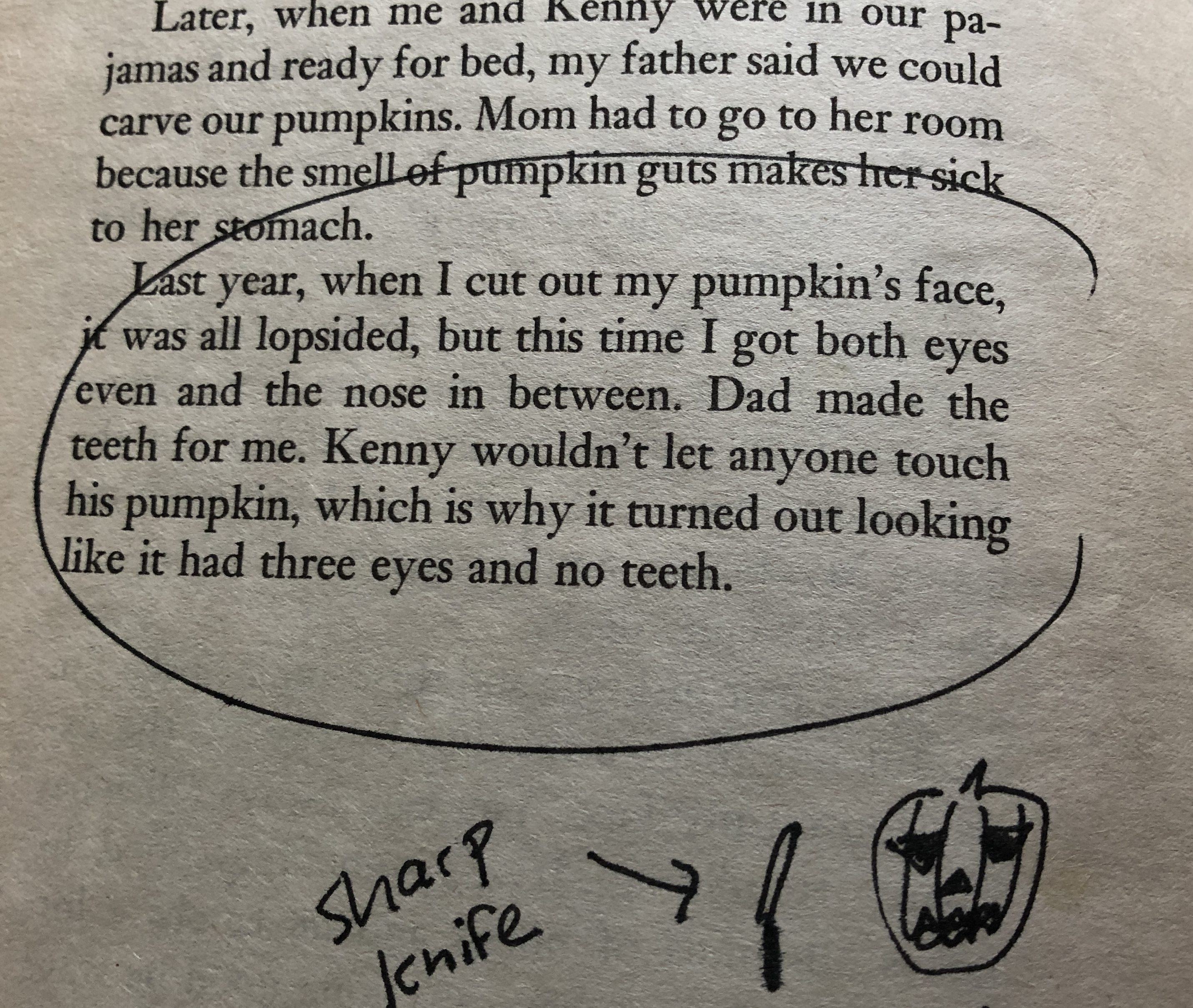 In my own household, this was the first year I let my 13-year-old carve our pumpkin all by herself. For this, I felt like I deserved a “daredevil mom of the year” award.
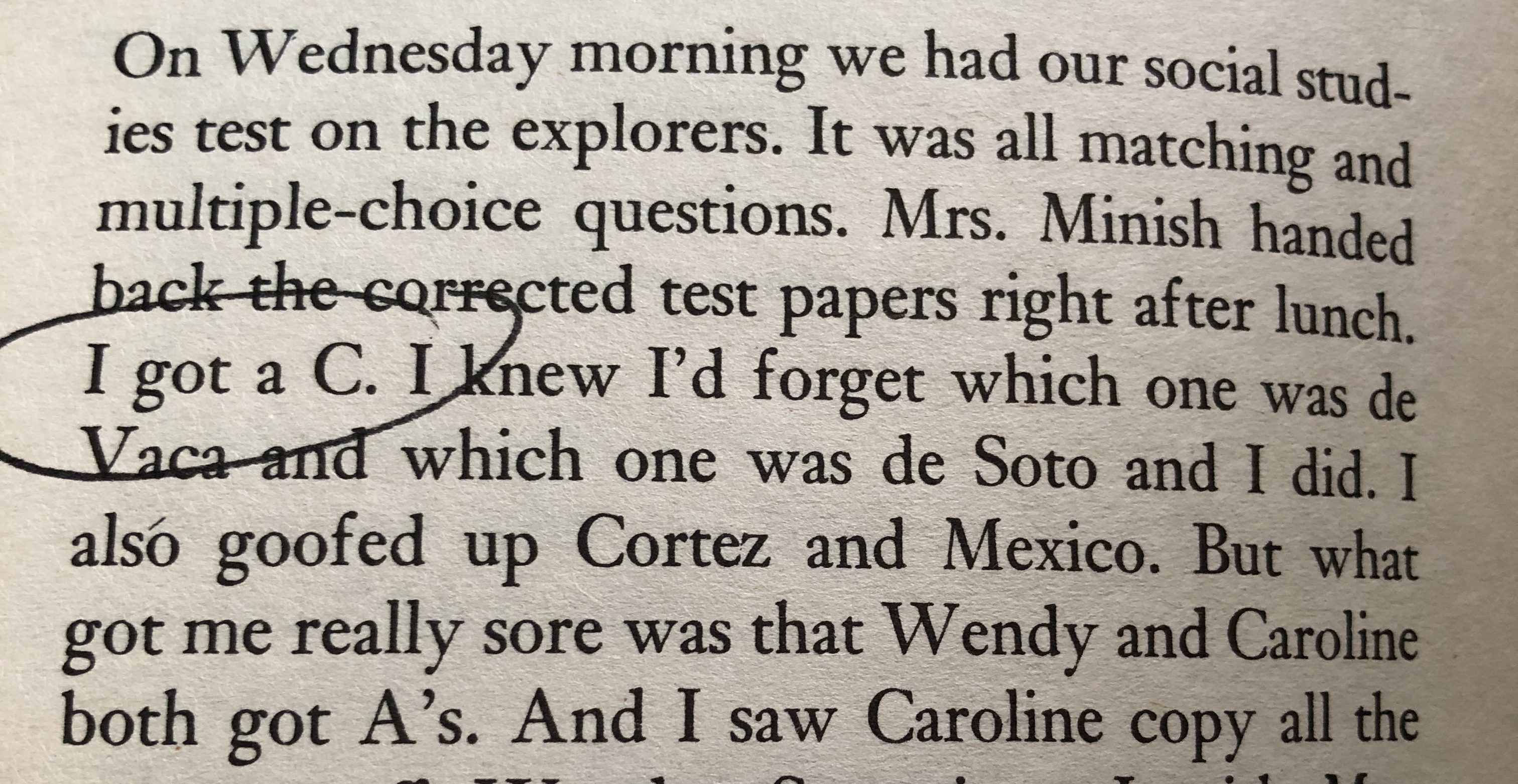 Blubber‘s Jill, on the other hand, is an all-around mediocre student who gets Cs in social studies and struggles in math. It’s the mean girls, Wendy and Caroline, who are the star students.
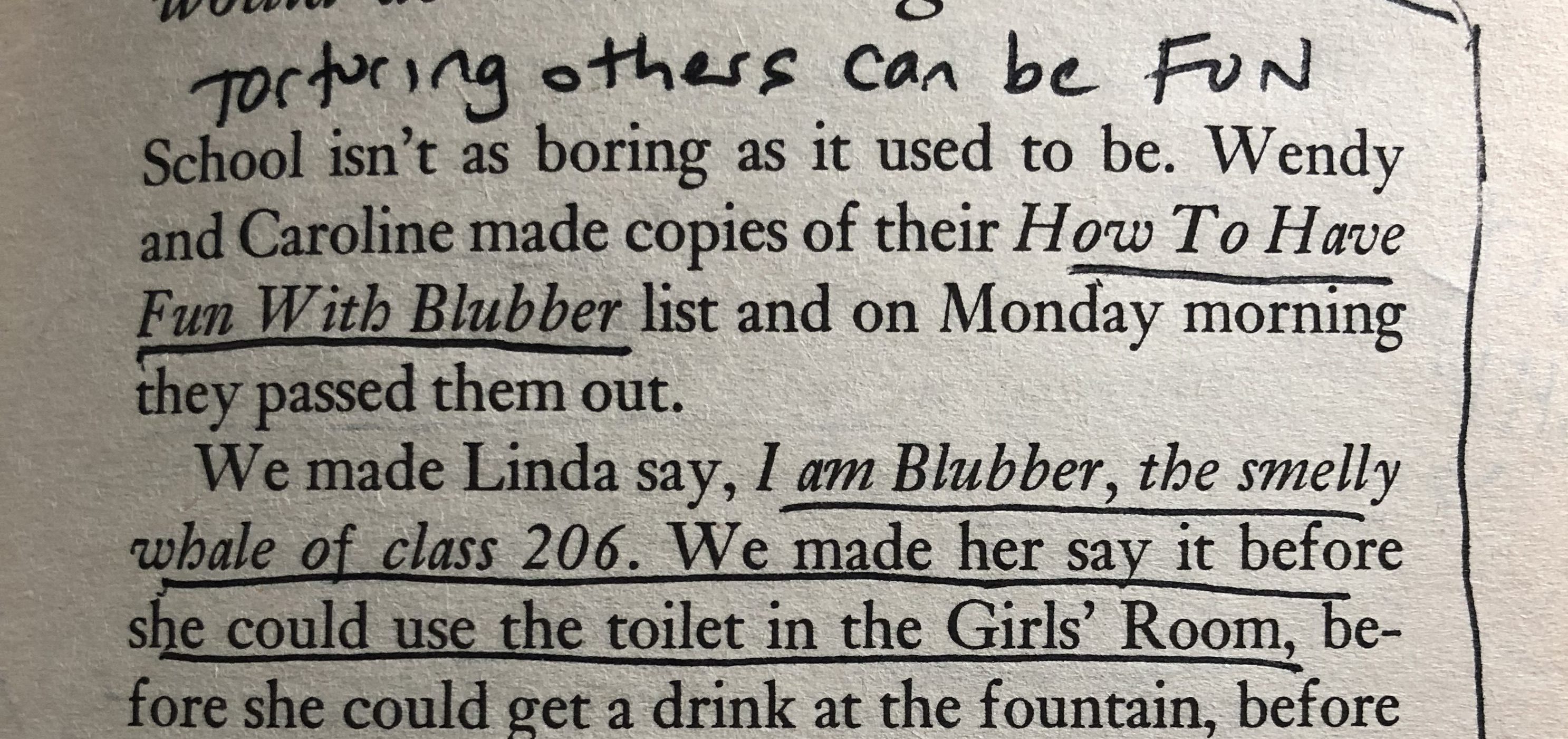 As a desperate survival tactic Linda even starts to volunteer these words before anyone makes her, in the hopes of appeasing her tormentors. This sounds like something straight out of a Maoist re-education camp.
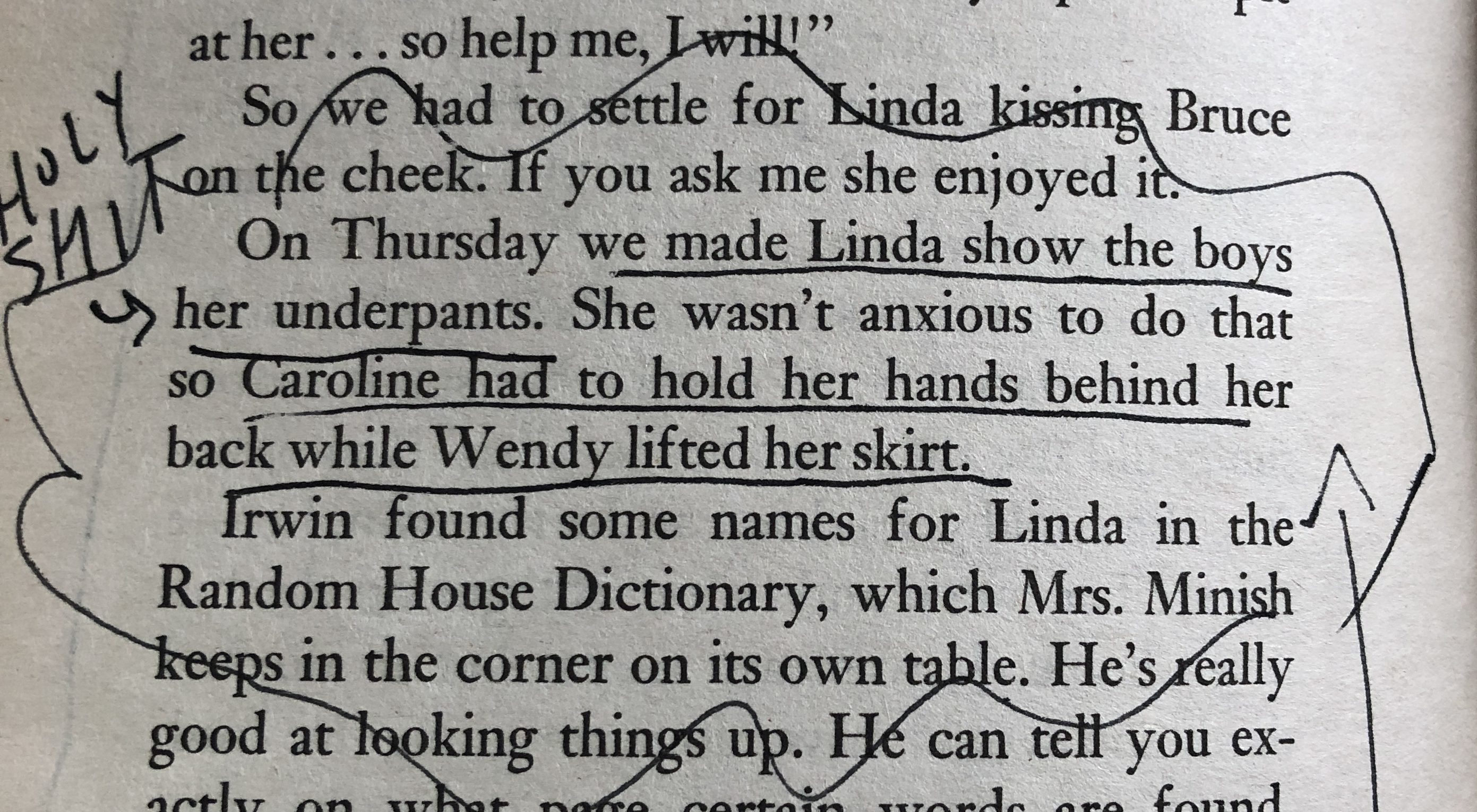 Then the girls pinch Linda’s nose closed and force-feed her a piece of candy that they tell her is a chocolate-covered ant. Wendy keeps her hand over Linda’s mouth “so she couldn’t spit anything out.” Linda gags and vomits.
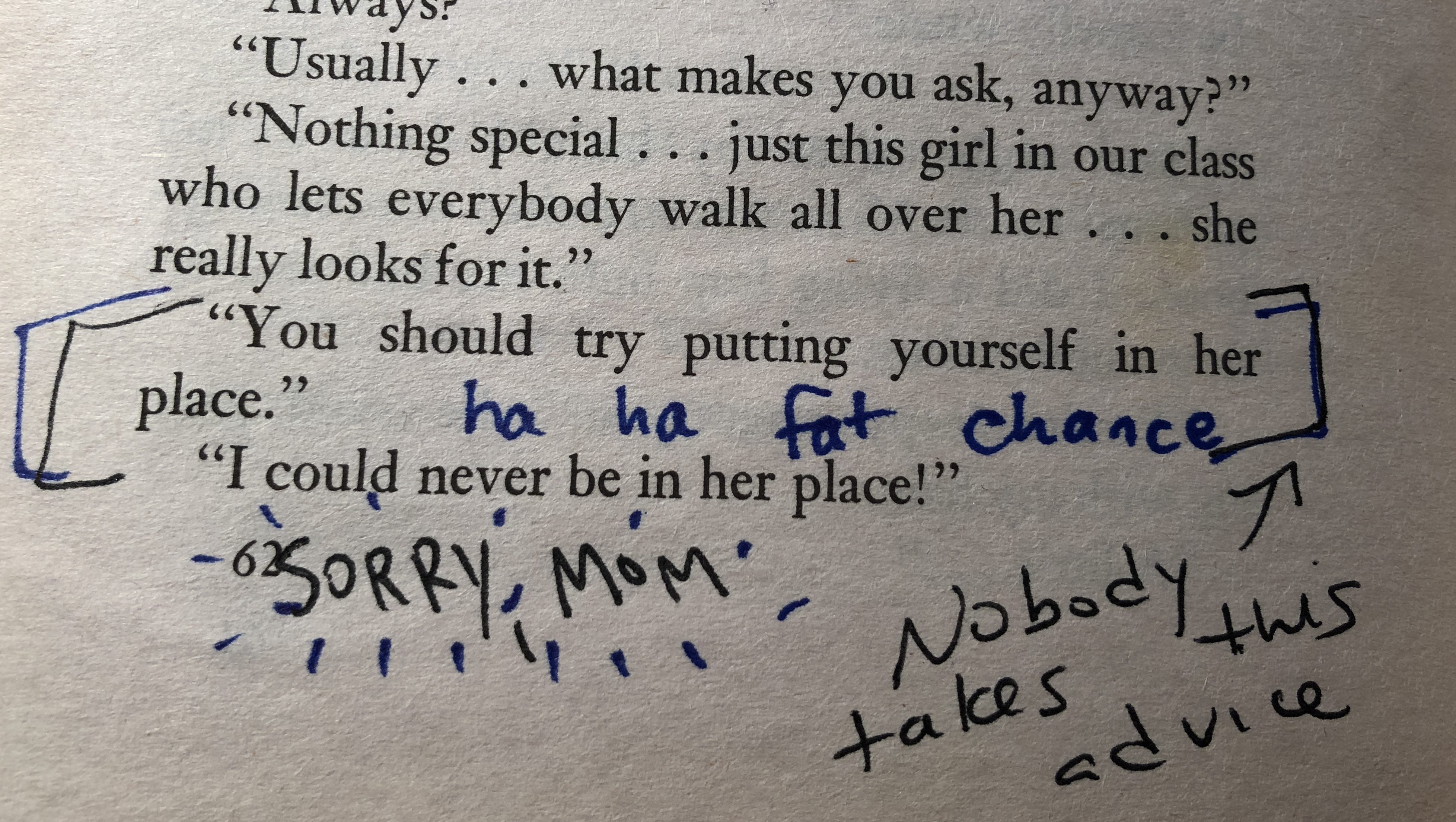 These days schools spend a lot of effort cooking up anti-bullying programs and kindness curriculums. But I can’t help but think that preaching this stuff to kids can be a waste of time. The advice goes in one ear and out the other, and the next thing you know some poor kid is getting a chocolate-covered ant shoved in her mouth. I desperately want to believe in the recent